Managing multiple Projects: when to create a new one vs extend an existing one
Three signals decide whether you split or extend
After this, you'll be able to apply one rule to decide whether new work needs its own Project or fits inside an existing one, so you avoid both a cluttered pile and an overloaded single Project.
Before you start
Complete Building your first real Project: a worked example first; this lesson builds on that setup sequence by deciding when a new piece of work deserves its own Project versus extending the one you just built.
The idea
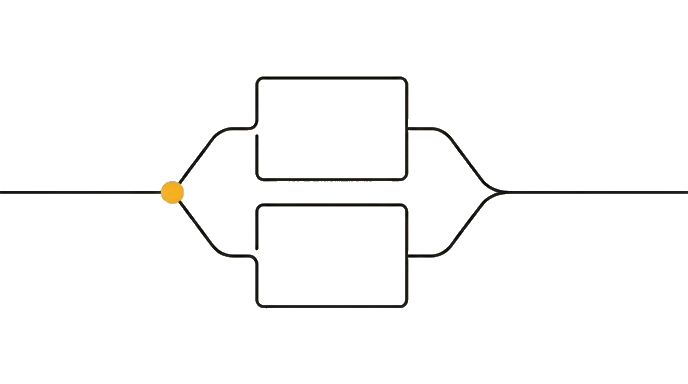
One rule decides create-new versus extend: three signals, context, role, and output style. All three different from your existing Projects means make a new one; two or more overlapping means extend instead. Once Projects work for you, the next problem is sprawl, and this check keeps your list navigable.
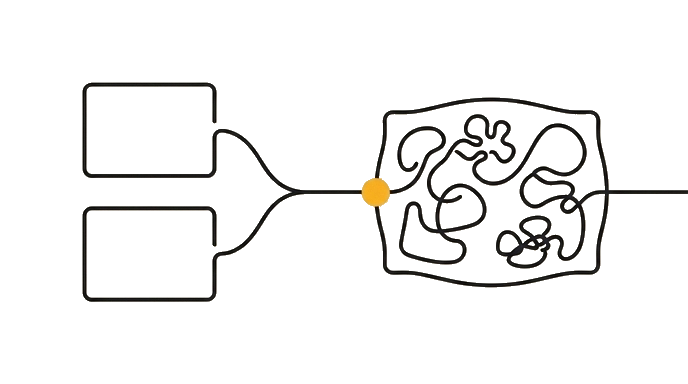
The signals are context (what background the work needs), role (who Claude is being), and output style (the form and tone). Compare new work to your existing Projects on all three. Internal team updates next to a client-proposals Project differ on all three, so make a new Project; proposal follow-up emails share context and role and differ only in output style, so extend.
Here is the before and after: Before, someone makes a separate Project for proposals, follow-ups, reminders, and thank-you notes, four near-identical Projects they cannot keep straight. After, all four share context and role, so they live in one "Client Proposals" Project with an Instruction for each format.
Now try it: take one piece of work you are about to start and score it against an existing Project on the three signals, then create-new if all three differ or extend if two or more overlap.
Run the three-signal check before you click "new Project" and your list stays small and usable.
Try it (10 min)
Watch out for
- Making a new Project for every minor task variation; if context and role match, extend instead of splitting
- Cramming unrelated work into one Project to keep the list short; all-three-different work deserves its own Project
- Comparing only the output style; the rule weighs context and role too, and those often decide it
- Forgetting that an overloaded Project produces muddy output when its Instructions start to conflict
- Skipping the three-signal check and deciding by gut; the check takes seconds and keeps your list navigable
Paste this into Claude
Help me decide whether a new piece of work needs its own Project or should extend an existing one. Use this rule: if context, role, and output style are ALL different from my existing Projects, make a new one; if two or more overlap, extend an existing Project.

My existing Projects:
[list them with a one-line description each, e.g.:
- "Client Proposals": formal proposals for marketing clients, I'm the pitch writer
- "Weekly Newsletter": casual newsletter for small-business owners]

The new work I want to do:
[describe it, e.g. "drafting LinkedIn posts to promote my agency"]

Please:
1. Compare the new work to each existing Project on the three signals (context, role, output style)
2. Tell me clearly: new Project, or extend which existing one
3. If extend, write the one or two extra Instructions I should add
4. If new, give me a one-line name following a consistent convention
What good looks like
- Claude compared the new work against your Projects on all three signals
- Claude gave a clear decision: create new, or extend a named existing Project
- If extending, Claude wrote the specific extra Instructions to add
- If new, Claude proposed a name matching your existing naming convention
- You can restate the three-signal rule from memory after the exercise
When this breaks
- Breaks when you create a new Project for every variation, because near-identical context fragments across many Projects you cannot keep straight, defeating the point of organizing.
- Breaks when you force unrelated work into one Project, because its Instructions begin to contradict each other and Claude produces inconsistent output across the mismatched tasks.
AI can help with this
Paste this into Claude: 'Here are my existing Projects: [list with one-line descriptions]. The new work is [describe it]. Using the rule (all three of context, role, output style different means new Project; two or more overlap means extend), tell me whether to create new or extend, and which one.'
You can now
You can complete the lesson outcome in a real Claude chat, Project, Artifact, Connector, Desktop, or Code surface.
- You can verify that claude compared the new work against your Projects on all three signals.
- You can verify that claude gave a clear decision: create new, or extend a named existing Project.
- You can verify that if extending, Claude wrote the specific extra Instructions to add.
- You can verify that if new, Claude proposed a name matching your existing naming convention.
Key takeaways
Decide with three signals: context, role, and output style. All three different means a new Project; two or more overlapping means extend an existing one. The check takes seconds and keeps your Project list small and usable.
- Compare new work against existing Projects on context, role, and output style before creating anything.
- Make a new Project only when all three signals differ from every existing Project.
- Extend an existing Project with extra Instructions when two or more signals overlap.
- Avoid a Project per minor variation; near-identical context scattered across many Projects becomes unnavigable.
- Avoid one overloaded Project; conflicting Instructions produce muddy, inconsistent output.
Go deeper