Deep dive · Jump here anytime when you want more on this idea
Thinking in Agentic Sessions
How to structure your work for AI-assisted output
After this, you'll be able to set up a Level 3 session with CLAUDE.md, plan mode, and @ context references so the agent stays grounded across multi-file changes.
Before you start
Before diving in, complete Building a Tab Complete Habit so you have the read-before-accept reflex that agentic sessions depend on.
The idea
At Level 2, the model sees a few lines near your cursor. At Level 3, it can see your entire project. Cursor and Claude Code connect chat directly to your codebase, so you ask for a change that touches three files and the agent makes all three edits. The shift is real, and what it changes most is not how you type. It is how you plan.
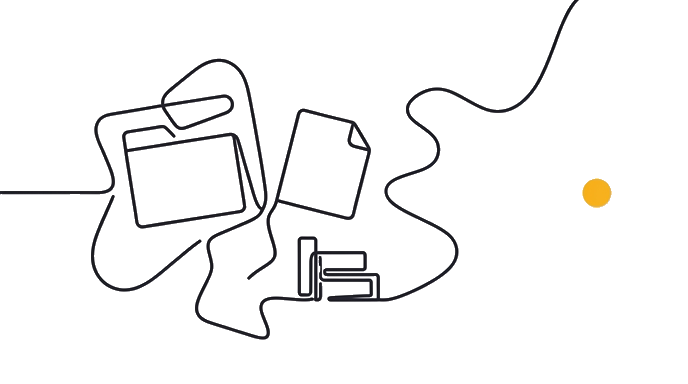
- ContextStart with the task, constraints, and current state.
- Thinking in Agentic SessionsApply the lesson move to the work.
- ProofKeep the result only when the check passes.
Every Level 3 session still resets from zero. The model does not remember your conventions, the bug you fixed last week, or the patterns your team agreed on. CLAUDE.md is the file the model reads at the start of every session, and whatever you write there persists. The hard part is keeping it lean.
Here is the before and after: without CLAUDE.md, session 12 still suggests React class components your team banned in 2022. With a 3-line rule ("Never use class components. All components are functional. See src/components for examples."), that mistake never appears again across the next 50 sessions. Three lines written once, zero re-corrections after.
Two habits separate solid Level 3 work from chaotic Level 3 work. Plan mode means you ask the model to outline its approach before any code is written, then read the plan and catch misunderstandings early. @ context references mean you tell the model exactly which files matter instead of letting it guess. Both habits are about being deliberate with what the agent sees.
The most common Level 3 mistake is overstuffing CLAUDE.md. It is not a wiki. Every line is read at the start of every session. Write commands, not explanations. Keep it under 100 lines and update it when the model makes a mistake, not when you remember to.
Try it (5 min)
Watch out for
- Writing speculative rules before the model has actually made the mistake. Speculative rules waste tokens and rarely match real behavior.
- Adding general best practices like "write clean code" or "handle errors gracefully". The model already knows these and they cost tokens every session.
- Skipping plan mode on tasks that feel simple. Simple tasks have the most embarrassing regressions when the model guesses wrong about scope.
- Forgetting to start a new session after editing CLAUDE.md. The new rules only load at session start.
- Treating CLAUDE.md as a notebook for project notes, task lists, or meeting decisions. Anything that is not true in six months belongs in chat, not the file.
Paste this into Claude
I am setting up Level 3 sessions on a real project. Help me write the first CLAUDE.md. Ask me three questions in order, one at a time, and wait for my answer before the next: (1) What are the top three mistakes the model has made in this project that it repeated more than once? (2) What stack, libraries, or versions does this project use that the model might get wrong? (3) What patterns or files do you always want the model to use instead of the default approach? After my answers, write a CLAUDE.md under 30 lines where every line passes this test: would the model do the right thing without this rule? If yes, cut it. If no, keep it. Show me the file as a markdown code block I can paste into my project root.
What good looks like
- You answered each of the three questions with at least one real example from your own project, not a hypothetical
- Every rule in the resulting CLAUDE.md traces back to a specific mistake or constraint you described, not generic best practice
- The file is under 30 lines and you can name what behavior changes for each line
When this breaks
- Breaks when CLAUDE.md grows past about 100 lines because the noise drowns the signal and every session pays a tax for content the model would have done right anyway.
- Breaks when rules are written speculatively rather than from real failures because there is no feedback loop to tell you which rules earn their place.
- Degrades when you skip plan mode on multi-file tasks because the model commits to an approach silently and you discover the wrong scope assumption only after a dozen edits.
AI can help with this
Use AI to apply this lesson to your current work. Share your situation, ask for one concrete next step, and check the answer against this test: Write a CLAUDE.md under 30 lines where every line traces to a specific session mistake or project constraint, and you can name the behavior change each line produces.
You can now
Write a CLAUDE.md under 30 lines where every line traces to a specific session mistake or project constraint, and you can name the behavior change each line produces.
Key takeaways
Level 3 is about being deliberate with what the agent sees. CLAUDE.md is the rules file, plan mode is the review step, @ references are the spotlight, and every session still resets to zero.
- Plan mode and @ context references are the two skills that matter most at Level 3
- CLAUDE.md is the rules file the model reads every session. Every mistake is a rule waiting to be written
- Keep CLAUDE.md under 100 lines. Commands, not explanations. Update after real sessions, not speculatively
- Every session still resets. Nothing compounds yet. That is what Level 4 and beyond address.