Writing Your Portfolio Copy with Claude
After this, you'll be able to use Claude and your Portfolio Brief to write a hero tagline, short bio, long bio, and project descriptions: the copy that goes into your portfolio before you build anything.
Before you start
Complete Choosing Your Tool first. This lesson teaches you to write your copy before you build the site.
The idea
Claude writes your tagline, bio, and project descriptions from your brief, turning the copy creatives stall on longest into a first draft in minutes. Your Portfolio Brief tells Claude who you are. This lesson teaches you to ask Claude to write for you. The three types of copy every portfolio needs (a tagline, a bio, and project descriptions) are also the three things most creatives stall on longest. They know what they do but cannot say it without sounding generic. Claude solves this by writing from your brief: specific, first person, no filler phrases. The pattern for every lesson in this track is the same: paste your Portfolio Brief first, then the lesson prompt.
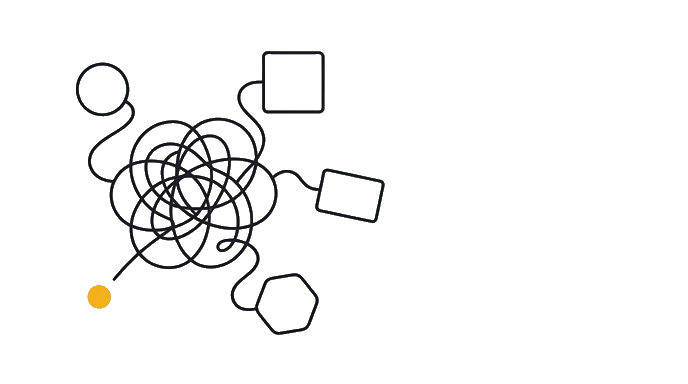
Here is the before and after: Without a Portfolio Brief, Claude writes "Passionate creative professional bringing ideas to life", a tagline that appears on thousands of portfolios and signals nothing. With a Portfolio Brief, Claude writes "Documentary editor with 8 years in branded content and broadcast", a tagline a creative director can act on. The same shift happens with project descriptions: "compelling brand content for a major sports brand" becomes "edited a 90-second brand film for Nike's EMEA campaign, delivering 12 versions across broadcast and digital." Specific details beat adjectives every time.
Now try it: run the exercise prompt below with your Portfolio Brief pasted at the top. Ask Claude for three tagline options, a short bio, a long bio, and a project description template. Read the tagline options aloud. The one that sounds like how you would actually describe yourself to a new client is the one to keep.
Try it (12 min)
Watch out for
- Accepting the first tagline option without editing it. Claude writes from your brief, but you know how you actually speak. Edit it until it sounds like you saying it out loud.
- Skipping the project descriptions because 'I'll write those myself later.' Do them now, even as placeholders. Blank project descriptions are the most common reason portfolios go live looking unfinished.
- Using third person in your bio. 'Jose is a video editor who...' works on a press kit. On your personal portfolio, it reads as distant and formal. First person builds trust faster.
- Not editing Claude's copy before it goes live. Claude writes to your brief. You edit for accuracy. The copy is a first draft, not a final product.
- Writing a bio longer than two paragraphs. Creative directors spend under 30 seconds on the About page. Short bios get read; long bios get scrolled past.
Paste this into Claude
[Paste your Portfolio Brief here: the paragraph you wrote in Lesson 0]

---

Now help me write my portfolio copy. I need four things:

**1. Hero tagline** (one sentence, 10-15 words, for the top of my portfolio)
- Avoid generic phrases: no "passionate," "creative professional," "storyteller," or "bringing ideas to life"
- Be specific to my role and specialty
- Give me 3 options so I can choose the one that sounds most like me

**2. Short bio** (2-3 lines for the hero section, below the tagline)
- First person
- Role + specialty + one distinguishing detail (years of experience, a notable client, an award, or a specific skill)

**3. Long bio** (one paragraph for the About page)
- First person
- Include: my specialty, the software I use (based on my role), my location and availability, and how to reach me
- End with something that invites contact, not a hard sell, just an opening

**4. Project description template** (a 3-sentence structure I can fill in for each project)
- Sentence 1: The brief (what the client needed)
- Sentence 2: My contribution (what I specifically did)
- Sentence 3: The result (what it produced)
- Write one example description using a placeholder project that matches my specialty, so I can see the format in action
What good looks like
- The hero tagline options are specific to your role: none of them could describe 'any creative'
- The short bio mentions your specialty and one specific detail (not just your job title)
- The long bio includes your software tools and a location/availability line
- The project description template follows the brief → contribution → result structure
- Reading the hero tagline options, at least one sounds like how you would actually describe yourself to a new client
When this breaks
- Breaks when the user skips pasting their Portfolio Brief. Without the brief, Claude writes generic copy that could be for anyone. Paste it first, every time.
- Breaks when the project description has no real details to work from. Claude will write a structural placeholder. That is fine. You fill in the specific project names, clients, and results in the next step.
AI can help with this
Use Claude or your build tool to help you you can use Claude and your Portfolio Brief to write a hero tagline, short bio, long bio, and project descriptions: the copy that goes into your portfolio before you build anything. Start with the exercise prompt and your real input. Ask for one draft, then check it against this proof: The hero tagline options are specific to your role: none of them could describe 'any creative'. Accept only the version you can verify yourself.
You can now
The hero tagline options are specific to your role: none of them could describe 'any creative'
- The short bio mentions your specialty and one specific detail (not just your job title)
- The long bio includes your software tools and a location/availability line
- The project description template follows the brief → contribution → result structure
- Reading the hero tagline options, at least one sounds like how you would actually describe yourself to a new client
Key takeaways
The pattern for every lesson: paste your Portfolio Brief first, then the lesson prompt. Claude writes specific copy from your brief. You edit for accuracy. Hero tagline (specific, no clichés), short bio (2-3 lines, first person), long bio (software + location + availability), project descriptions (brief → contribution → result).
- Paste your Portfolio Brief before every Claude prompt. It is the context layer that makes everything specific.
- Specificity over adjectives. 'Documentary editor, 8 years, branded content and broadcast' beats 'passionate creative storyteller' every time.
- First person for all bio copy. Third person on personal portfolios creates distance.
- Project descriptions follow three sentences: brief, contribution, result. Specific details beat adjectives.
- Claude writes the structure and tone. You edit for accuracy. It is a collaboration, not a one-shot output.