From skill to who needs it
Turn a list of skills into a ranked map of the people who pay for them
After this, you'll be able to use Claude to turn your skills list into a 'who needs this' demand map: the specific people and markets that pay for what you can do, ranked by realistic demand, with one honest risk on each.
Before you start
Complete The skills you forgot you have first; this lesson takes the skills list you built there and maps each one to the specific people who pay for it, so you need that list in hand before you can find its buyers.
The idea
A skill with no buyer attached is a hobby, and the gap between the two is almost always 'who specifically', not 'is it any good'. Most people get stuck right here. They have a real skill, but "I'm good at organizing things" floats in the air with no name on it, so it never turns into money. The missing move is not more skill. It is pointing the skill at a specific person who already feels the pain it solves and already pays to make that pain go away.
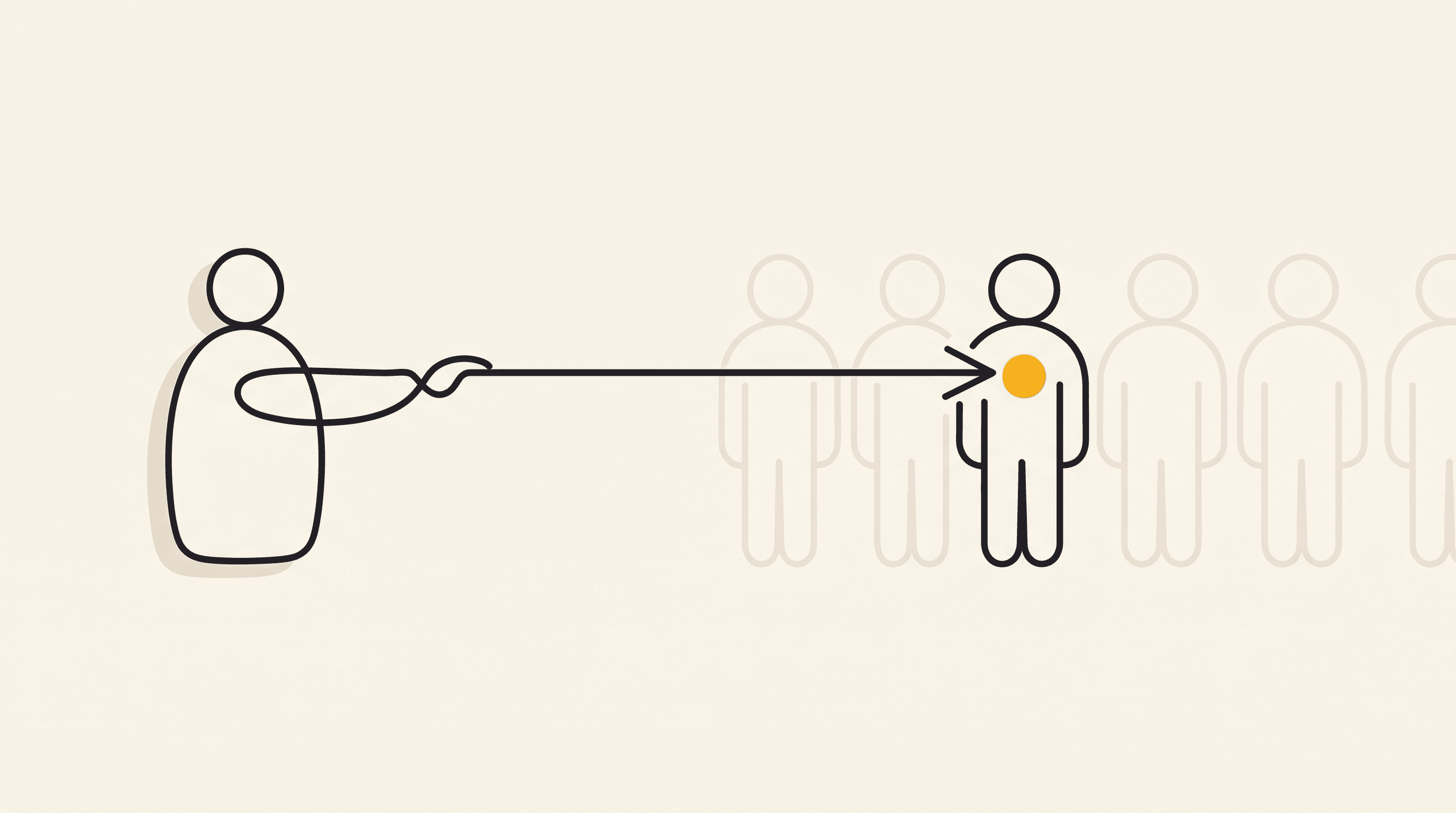
The good news is that this is research, and research is exactly what Claude is built for. You bring the skills (you found them last lesson). Claude brings a fast, honest survey of who tends to need each one, what they currently pay someone to do it, and how badly they want it solved. The honesty part matters more than the speed. A flattering map that says "everyone needs you" is worthless, because "everyone" is nobody you can actually message on Monday. You want the short, specific, ranked list of real buyers.
Here is the before and after: Before, you have a list of things you can do, but no idea who to point them at, so the skills just sit there. After this, you have a demand map: for each skill, the specific people and markets who pay for it, ranked from "someone would hire you for this soonest" to "real, but slower," each with one honest risk. You stop guessing who your customer might be and start seeing names.
Now try it: paste the prompt below, along with the skills list from the last lesson. Claude will map each skill to the people who need it, rank those by how realistic the income is, and tell you straight where the demand is thin. Look for the direction that ranks high AND uses a skill you actually want to use.
You do not need a new skill to make your next move. You need to aim the one you have at a person who already pays to solve that exact problem.
Try it (14 min)
Watch out for
- Accepting 'small businesses' or 'everyone' as an answer. That is not a buyer you can message. Push Claude until it names the specific kind of person, their size, and the exact situation where the pain shows up.
- Falling for an all-green map where every idea is a winner. Real markets have thin spots and crowded corners. If Claude does not flag at least one weak option, tell it to be harder on you.
- Picking the direction that excites you most while ignoring the ranking. Excitement matters, but a thrilling idea with no buyers pays nothing. Aim for the overlap: ranks high AND you would enjoy it.
- Skipping the risk line because it is a buzzkill. The risk is the part that saves you a wasted month. Read it, and pick a direction whose risk you can actually live with.
- Treating the map as final. It is a hypothesis to test, not a verdict. The next lessons turn the top direction into an offer and then into messages that prove whether the demand is really there.
Paste this into Claude
You are my market researcher and demand analyst. I have a list of skills, and I need you to map each one to the specific people and markets who actually pay for it, then rank them honestly. Be straight with me, not encouraging. A flattering map is useless to me.

Here are my skills, from an earlier interview:
[paste your top skills list from the previous lesson here]

For each skill (and for the strongest combinations of two or three skills together), tell me:
1. WHO specifically needs this. Not "businesses" or "everyone". Name the actual type of person or business: the kind, the size, the situation they are in when this pain shows up.
2. WHAT they currently do about it (pay a freelancer, hire staff, struggle with it themselves, ignore it), and roughly what that costs them, so I know money already moves here.
3. HOW STRONG the demand really is. Be honest. Is this something people actively look to pay for, or something they would only buy if it landed in their lap? If a market is thin or crowded, say so plainly.
4. ONE honest risk or catch for going after this market.

Then build me a DEMAND MAP: rank every direction from "I could realistically get paid for this soonest" to "real demand, but slower or harder to reach". Put the soonest-income options at the top.

At the end, recommend the 2 or 3 directions you would chase first, and explain why each made the cut. If one of my skills has no real paying market, tell me that too. I would rather know now than waste a month on it.
What a good response looks like
Here is your demand map, ranked by how soon you could realistically get paid, with the honest version of each market. I am not going to tell you everything is a winner, because some of these are stronger than others.

DEMAND MAP (soonest income at the top):

1. Process and operations cleanup for small service businesses (5 to 30 people)
   Who: owners of growing service businesses (agencies, clinics, trades, studios) whose systems were built for 5 people and are breaking at 20.
   What they do now: they struggle with it themselves or pay a pricey consultant. The pain is constant and expensive.
   Demand: strong and underserved. They feel this every week.
   Risk: you have to find them, and they are busy. Outreach has to name their exact pain to get a reply.
   Why it is #1: high demand, money already moving, and it is your strongest skill.

2. Spreadsheet and data cleanup, one-off and ongoing
   Who: bookkeepers, real estate agents, e-commerce sellers, small nonprofits drowning in messy sheets.
   What they do now: they limp along or hire a freelancer per project.
   Demand: steady and easy to start, because the jobs are small and the buyers are everywhere.
   Risk: it can stay small and per-project unless you turn it into a recurring service. Good for a fast first yes, but watch the ceiling.

3. Documentation and "write down how we do this" projects
   Who: businesses about to train new hires or hand off a role.
   What they do now: they keep meaning to and never do.
   Demand: real but slower. It is a "nice to have" until a specific trigger (a hire, someone leaving) makes it urgent.
   Risk: longer sales cycle. You often have to wait for the trigger or create the urgency yourself.

THIN MARKET, BE HONEST:
- "General virtual assistant" came up in your skills, but that market is crowded and price-pressured. You would be competing on cheapness, not value. Skip it as a headline, even if it stays a side option.

WHAT I'D CHASE FIRST: directions 1 and 2. Direction 1 is where the real money and your best skill meet. Direction 2 is the fastest path to a first paid yes while direction 1 builds. Start outreach on both, lead with #1.
What good looks like
- Every direction names a specific type of buyer (like 'solo bookkeepers with too many clients at tax season'), not a vague 'small businesses' or 'everyone'
- The map is ranked by realistic, soonest income, not by what sounds most exciting, so the top of the list is genuinely where you could get paid first
- Claude named at least one market as thin, crowded, or slow, instead of telling you every idea is great (an all-green map means it was flattering you)
- Each direction carries one honest risk, so you walk in with your eyes open rather than discovering the catch after you have committed
- You can point to at least one direction that ranks high AND uses a skill you actually want to use day to day
When this breaks
- Breaks when you give Claude vague skills instead of the specific list from last lesson, because a market map can only be as precise as the skills feeding it, so 'I'm organized' produces a useless 'lots of people value organization'. Paste the real, detailed list.
- Breaks when you ask 'is this a good idea?' instead of asking it to rank options by realistic demand, because a yes-or-no question invites a flattering yes, while a forced ranking makes it compare and tell the truth about which markets are actually thin.
- Breaks when you treat the highest-ranked direction as a guarantee, because a demand map is a research estimate, not a signed contract, and the only real proof is a buyer saying yes. Use the map to choose where to test first, then go test it.
AI can help with this
Paste your skills list and the prompt, then read the map it builds. Claude does the market research and the ranking. Your job is to feed it the real skills and to insist it stay honest about where the demand is thin.

You can now
Name the single direction at the top of your map and the specific buyer it points to.
- Make sure that buyer is a real type of person ('solo bookkeepers at tax season'), not 'businesses'.
- State the one honest risk that comes with chasing that direction.
- If your map came back all-green, push back: tell Claude to rank ruthlessly and flag a thin market.
Key takeaways
A skill becomes income only when it is aimed at a specific person who already pays to solve that exact pain. A ranked demand map turns 'I'm good at this' into 'these named people need it, and here's who to reach first'.
- A skill with no named buyer is a hobby. The move that turns it into money is pointing it at a specific person who already feels the pain it solves.
- 'Everyone needs this' is a trap. 'Everyone' is nobody you can message. You want the short, specific list of real buyers, ranked, not a flattering wide net.
- Rank by soonest realistic income, not by excitement. The most exciting idea with no buyers pays nothing; the goal is the overlap of high demand and work you enjoy.
- An honest map flags thin and crowded markets. If every direction comes back as a winner, Claude is flattering you, so tell it to be harder and rank ruthlessly.
- The map is a hypothesis, not a verdict. The real proof is a buyer's yes, so use it to choose where to test first, then test it with an offer and outreach.