Pressure-test your brand against competitors
After this, you'll be able to put your brand next to your competitors with Claude, spot where you all sound the same, and find the honest gap only your brand can own.
Before you start
Complete Write a reusable brand voice guide first; with your voice and pillars captured, this lesson tests them against real competitors to find the difference only you can own.
The idea
If a competitor could swap their logo onto your website and nothing would feel wrong, you do not have a brand yet. A brand only means something where it is different. The fastest way to find your difference is to look hard at everyone you sound like.
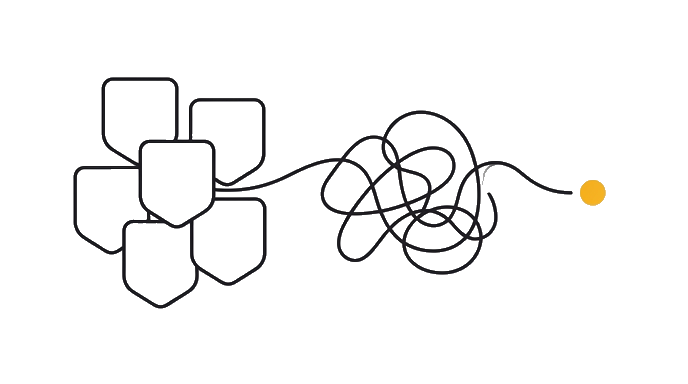
This is a positioning check (positioning is the space your brand owns in people's minds versus the alternatives). You are not copying competitors. You are finding the crowded middle where everyone says the same things, so you can step out of it.
How to run it with Claude is direct. You gather a few competitors' words: their taglines, their about pages, a couple of social captions. You paste that text in, along with your own. Then you ask Claude to map the overlap: what claims, tones, and promises show up again and again across all of you.
Claude can also read screenshots. If a competitor's vibe lives in images more than words, you can paste a screenshot of their page and Claude will describe the tone it projects. That lets you compare feel, not only copy, which matters when everyone in your field looks the same too.
Here is the before and after: A coffee brand reads its own "ethically sourced, expertly roasted, community-focused" and feels proud, until Claude lines it up against eight competitors saying the identical thing. The sameness is the wake-up call. They find their real gap: they are the only one that roasts tiny batches and tells you the exact day it happened. That becomes the whole brand.
The goal is an honest gap, not a clever one. Claude will brainstorm differences happily, but a difference you cannot actually deliver is a lie with a deadline. You want the place where your real pillars and your real voice already separate you, named sharply enough to lean on.
Find the crowded middle where you all sound alike, then claim the honest space only you can stand in, because sameness is the problem and your real difference is the brand.
Try it (10 min)
Watch out for
- Comparing from memory instead of real copy. Paste competitors' actual words or a screenshot; your impression of them is fuzzier than the truth.
- Treating the overlap as flattering ('we all care about quality'). The sameness is the warning sign, not the badge.
- Inventing a difference you cannot deliver. A clever gap you do not actually fill is a promise you will break.
- Copying a competitor's distinctive angle. The goal is the space only YOU can own, grounded in your real pillars, not a borrowed one.
Paste this into Claude
Help me pressure-test my brand against my competitors so I can find where I blend in and where I can stand apart.

My brand's words (tagline, about line, a caption or two): [PASTE].
My pillars and voice: [FROM EARLIER LESSONS].
Competitor words (paste taglines / about lines / captions from 3 to 5 of them; or describe a screenshot you'll attach): [PASTE].

Please:
1. Map the crowded middle: which claims, tones, and promises show up across most of us (including me).
2. Tell me bluntly where I sound interchangeable with the others.
3. Find 2 to 3 honest gaps where my real pillars or voice already set me apart, and that I could actually deliver.
4. For the strongest gap, draft one sentence that stakes my claim to it.
What a good response looks like
Here's your pressure test, for an indie coffee roaster:

**The crowded middle (everyone, including you):**
"Ethically sourced," "expertly roasted," "community-focused," warm-but-generic tone. Five of the six of you use at least two of these word-for-word.

**Where you sound interchangeable:** your about page could be any of them. Cover the logos and nobody could tell you apart.

**Honest gaps you can actually deliver:**
- You roast in batches under 5kg and date every bag. Nobody else does.
- You name the farm and the farmer, not only the country.
- Your founder replies to every email personally.

**Stake your claim:** "Roasted in tiny batches and stamped with the day it happened, so you always know exactly how fresh your coffee is." That is a sentence none of your competitors could honestly copy.
What good looks like
- You gathered real competitor copy (or a screenshot) and your own, not only impressions
- You can name the crowded middle: the claims and tones everyone in your field shares
- You found at least one honest gap your real brand could actually deliver, not a clever fiction
- You have one sentence that stakes a clear claim to your strongest difference
When this breaks
- Breaks when you only look at yourself. A brand reads as unique in isolation and interchangeable the moment you line it up against the field.
- Breaks when the gap you pick is aspirational, not real. If your difference depends on something you do not actually do yet, it collapses the first time a customer checks.
AI can help with this
Use Claude, ChatGPT, Gemini, Canva, Adobe Express, Firefly, Midjourney, Codex, or another approved creative tool based on the job. Give the assistant real brand context, examples, exclusions, and a review standard, then use human taste to choose what survives.
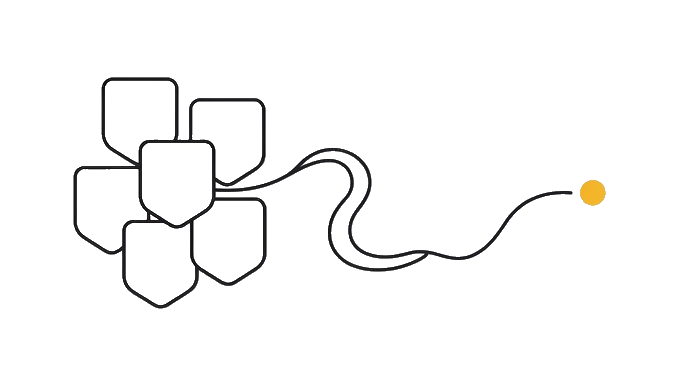
You can now
You can complete the lesson outcome against a real creative job, brand, asset, or campaign.
- You gathered real competitor copy (or a screenshot) and your own, not only impressions.
- You can name the crowded middle: the claims and tones everyone in your field shares.
- You found at least one honest gap your real brand could actually deliver, not a clever fiction.
- You have one sentence that stakes a clear claim to your strongest difference.
Key takeaways
A brand means something only where it differs. Line your real words up against competitors with Claude, find the crowded middle, and claim the honest gap your pillars and voice already give you.
- Positioning is the space your brand owns in people's minds versus the alternatives.
- Gather real competitor copy (or screenshots) and your own, then have Claude map the overlap.
- The crowded middle, where everyone says the same thing, is the problem to step out of.
- Claude can read screenshots, so you can compare feel and tone, not only words.
- Pick an honest gap your real pillars can deliver; a difference you cannot fulfill is a broken promise.
Go deeper