Build your first Skill and put it on a schedule
After this, you'll have one installed Skill that auto-fires on natural language, passes its own eval, and is wired to a Scheduled Task that runs it on your chosen cadence.
Before you start
Complete Create a Cowork Project that runs a recurring workflow first; this lesson builds the Skill that fires inside that Project, and Scheduled Tasks pair with the Project pattern from Lesson 2.
The idea
A Skill is a packaged prompt Claude fires by itself, and its description, not its body, decides whether it fires. A Skill is a packaged prompt that Claude calls by name when your message matches its description. You build a Skill once, and it shows up in every future Cowork session ready to fire.
The hard part is not the prompt body. The hard part is the description, because the description is what decides whether the Skill fires when it should and stays quiet when it should not.
Here is the before and after: without a Skill, you paste the same 200-word prompt into Claude every Monday to draft your team update. With a Skill named team-update, you type "draft this week's team update" in any Cowork session and the Skill fires on its own, with the right instructions, format, and tone. No paste, no re-explaining.
Here is why that matters in plain money terms: a token is a small chunk of text the AI counts as it reads, and each one costs a little money and a little of Claude's attention. So the 15 back-and-forth messages and 12,000 tokens of an unskilled run become 2 messages and 6,000 tokens once the Skill exists.
Two paths to build the first Skill: the built-in Skill Creator (an interview-based tool inside Cowork) or makemyskill.com (a third-party website, faster but external). Start with the built-in one. It interviews you, generates a SKILL.md draft (the Skill's instructions saved as a plain text file), then runs an eval (a quick automatic test that fires the Skill against sample messages so you can see whether it triggers correctly) before you install.
The eval step is the one most people skip, and the one that catches a Skill that almost works. To install: Settings > Customize > Skills > + > Upload. From there the Skill auto-fires on any matching message in any Cowork session, and typing its /command name by hand is a manual escape hatch.
Now try it: pick the one prompt you paste into Claude most often this week, the one you re-explain. Run the built-in Skill Creator on that, pass the eval, and install. Pair it with one Scheduled Task, and by next week, that prompt fires itself.
Build a Skill for the prompt you re-explain most; let a Scheduled Task fire it forever.
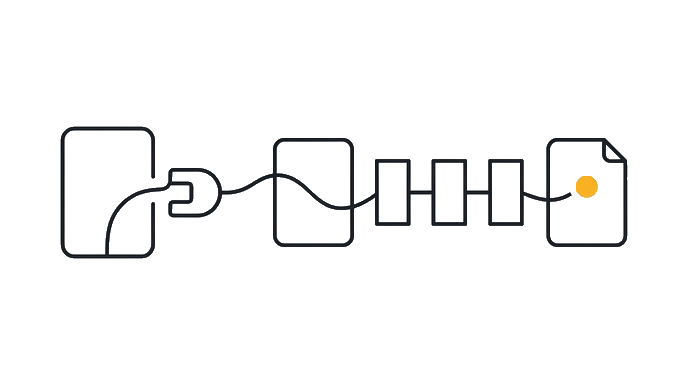
- You send a messageAny normal request you type into a Cowork session.
- Claude checks SkillsClaude reads the description of every installed Skill to see if one fits.
- Does it match?The description, not the prompt body, decides if the Skill is a fit.
- Blocked by the guardrail?The Do NOT use for line keeps the Skill quiet on adjacent requests.
- Skill firesClaude runs the Skill with its built-in instructions, format, and tone.
- Default voiceNo Skill fits, so Claude just answers in its normal way.
- Scheduled Task fires itA clock-driven task calls the Skill by name on your chosen cadence.
- Draft savedThe output lands in your Project folder as a draft you review before sending.
Try it (18 min)
Watch out for
- Skipping the eval step because the SKILL.md looks fine. The eval is where a Skill that almost works becomes one that actually fires correctly. The Skill Creator runs it for you; click 'View the eval results' before you install.
- Writing a description that only says what the Skill IS. Add 'Do NOT use for: ...' lines. Negative boundaries prevent the Skill from hijacking adjacent prompts. A Skill that fires when it should not is worse than one that does not fire.
- Naming the Skill /tu or /weekly. Cryptic names die in your own memory. Use the full descriptive name (lowercase, hyphens): /team-update, /weekly-newsletter, /client-summary. You will see this name in Settings every time you maintain Skills.
- Wiring the Scheduled Task to send or publish the output autonomously. Always have the prompt end with 'save as draft in folder; do not send'. The Skill writes the draft; you ship it. Autonomous publishing is one outage away from a brand-damaging draft going out at 8am Monday.
Paste this into Claude
Use the skill-creator to help me build a skill for [the recurring task you paste prompts for most: writing your weekly team update, drafting LinkedIn posts, summarizing client meetings, etc.].

When the Skill Creator interviews you, answer specifically. "I write weekly team updates that always start with the headline metric, use 3 sections max (wins, blockers, next-week priorities), end with a single owner-tagged action, and stay under 400 words" beats "I write team updates".

After the SKILL.md is generated, do NOT skip the eval step. Click "View the eval results" and watch how the Skill fires against the sample scenarios. If it fires when it should not, tighten the "Do NOT use for..." line in the description. If it does not fire when it should, broaden the trigger phrases.

After install, test the Skill in three ways:
1. Type a request that should fire it ("draft this week's team update"). Should fire.
2. Type a request that should NOT fire it ("draft a long-form essay on team culture"). Should stay quiet.
3. Type a request adjacent to the trigger ("write a 1-1 prep doc for my manager"). Should stay quiet unless that was intended.

Tell me which of the three matched expectations and which did not.
What a good response looks like
Skill installed. Three-test results:

1. "draft this week's team update". Skill fired. Generated draft with headline metric (engagement up 12%), 3 sections (wins / blockers / next-week priorities), single owner-tagged action (Alex to unblock the auth review by Wed), 372 words. Matched expectation.

2. "draft a long-form essay on team culture". Skill stayed quiet, Claude wrote in default voice. Matched expectation. The "Do NOT use for: long-form essays, opinion pieces, culture documents" line in the description did its job.

3. "write a 1-1 prep doc for my manager". Skill stayed quiet. Matched expectation, though Claude's default response was generic and weak. Possible next move: build a second Skill for /one-on-one-prep specifically, with its own description and instructions.

Eval observations before install:
- Original description triggered on "summarize the week" which caught my journaling prompts too. Added "Do NOT use for: personal journaling, weekly reflections, individual reviews" line. Re-ran eval. Cleaner.
- Trigger phrases tested: 4 of 5 fired correctly. Fifth ("can you put together this week's standup notes") did not fire. Added "standup notes" to the trigger phrases line. Re-ran eval. All 5 fired.

Skill is live. Ready to wire to a Scheduled Task for Friday 4pm in my Team Updates Cowork Project.
What good looks like
- One Skill is installed in Cowork (visible at Settings > Customize > Skills) with a clear trigger description, a 'Do NOT use for...' line, and a body of instructions matching how you actually do the task
- The eval step was run and reviewed (not skipped). You looked at how the Skill fired against sample scenarios before installing.
- The three-test sequence (should fire, should stay quiet, adjacent) ran and you noted which results matched expectations
- The Skill's /command name follows the rules: lowercase, hyphens only, no spaces, descriptive (e.g. /team-update not /tu or /TeamUpdate)
- You picked the prompt you paste most often as the basis; the Skill solves a real recurring task, not a hypothetical one
Go deeper (5 min)
Paste this into Claude
(Set this up via the UI inside the Cowork Project where this Skill will fire.)

1. Open the Cowork Project most relevant to the Skill you built in the first exercise (or create one if needed: Skills can fire in any Project).
2. Click "Scheduled tasks" > "New".
3. Write the prompt: "Fire the [your-skill-name] Skill. Pull the relevant inputs from this Project folder. Save the output as a draft in the folder. Don't send or post anything."
4. Pick a frequency that matches the task: Friday 4pm for weekly team updates, Monday 8am for weekly newsletters, daily 6pm for end-of-day summaries.
5. Save.

Then leave the Desktop app open so the scheduled fire happens. On the next firing, a draft lands in the folder.
What good looks like
- One Scheduled Task is set inside a Cowork Project that fires the Skill on your chosen cadence (weekly, biweekly, or daily)
- The Scheduled Task prompt names the Skill by /command, pulls inputs from the Project folder, and saves the output as a draft (does not send, post, or publish anything autonomously)
- Frequency matches the real cadence of the task (Friday 4pm before the week wraps, Monday 8am before the week starts, whatever your rhythm is)
- On the next scheduled fire, the draft lands in the Project folder before you need it
- If the Skill fires but the Scheduled Task does not, you can tell the difference (Skill firing = manual or auto-fire from a Cowork message; Scheduled Task = clock-driven, app must be open)
When this breaks
- Breaks when the description is too broad. 'Use for any writing task' fires on every message. The Skill becomes noise, you turn it off, the setup time is wasted. Specific trigger language + explicit 'Do NOT use for' lines are the fix.
- Breaks when the Skill body assumes context that lives only in your head. If the Skill says 'follow the standard format' without naming what standard, Claude makes one up. Either define the format inline in the Skill, or have the Skill reference a file in the Cowork Project folder.
- Breaks when you build the Skill in one Cowork Project but expect it to fire in another. Skills are global to your Claude account, not scoped to a Project, but they still need the right context files in whatever folder they fire in. Build the Skill where the work happens.
AI can help with this
Open Cowork and say: 'Use the skill-creator to help me build a skill for [the task you do weekly]. Walk me through the interview, run the eval, then show me the install steps in Settings.' Claude runs the Creator end to end.
You can now
You can install one Skill with a clear trigger and do-not-use boundary.
- You can run the should-fire, should-stay-quiet, and adjacent-request tests.
- You can fix the trigger when the Skill fails to fire.
- You can pair the Skill with a Scheduled Task only after the eval passes.
Key takeaways
Build a Skill for the one prompt you re-explain the most. Run the eval. Install it. Pair it with a Scheduled Task in the right Cowork Project. By next week, that prompt fires itself, and you have one fewer thing to remember.
- A Skill is a packaged prompt that auto-fires on matching messages. Built once, it shows up in every future Cowork session ready to run.
- The description decides everything. Specific trigger language + explicit 'Do NOT use for' lines stop the Skill from firing on adjacent prompts. Bad description = Skill never fires or fires too often.
- The eval step is the one most people skip. It tests the Skill against sample scenarios before install. Skip it once and you ship a Skill that almost works.
- Install path: Settings > Customize > Skills > + > Upload. After install, the Skill fires globally across Cowork on any matching message. /command name is a manual escape hatch.
- Skill + Scheduled Task = compounding. The Skill carries the instructions, the Scheduled Task carries the cadence. End the scheduled prompt with 'save as draft; do not send' so autonomous fires never ship work you have not reviewed.
Go deeper