Conversation history: what Claude remembers (and what it forgets)
Session memory versus permanent memory, explained once
After this, you'll be able to explain why Claude remembers everything in one conversation but nothing in the next, and decide when to keep working in a chat versus when to start fresh.
Before you start
You'll want a working sense of steering a reply across follow-up messages before this lesson, because those follow-ups only work while you stay inside one conversation, which is exactly the memory boundary explained here.
The idea
Inside one conversation, Claude remembers everything you said. Open a new one and it starts from a blank slate. That is the whole rule: session memory inside a chat, nothing carried across chats by default.
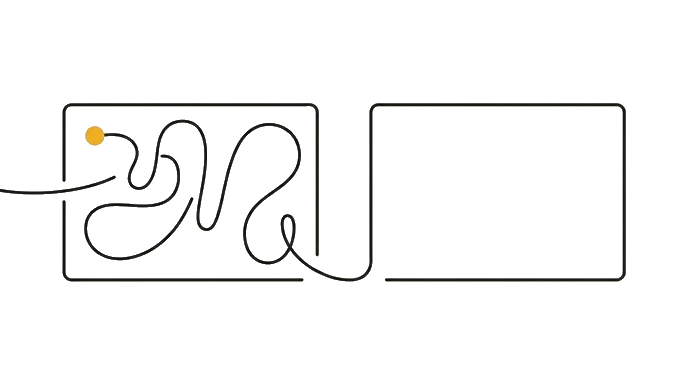
Claude is not ignoring you and it is not broken. A new conversation begins fresh the same way a phone call does not remember yesterday's call.
Here is the before and after: On Monday you spend twenty messages teaching Claude your writing style and every reply improves. On Tuesday a fresh chat hears "write it in my usual style" and goes generic, because that style lived in Monday's chat this one never saw. (Projects and Memory, both free features you will set up later in this track, make context carry over on purpose; this lesson is the default before you turn anything on.)
Now try it tell Claude a detail about yourself, ask it to use that detail a few messages later, then open a brand new chat and ask the same thing.
Same context inside one chat, blank slate in a new one: that rule explains most "why did Claude forget?" moments.
Try it (9 min)
Watch out for
- Opening a new chat for each message and wondering why Claude lost the thread
- Assuming Claude remembers a file or detail from yesterday's conversation
- Confusing the default forgetting with the optional Memory feature you have not turned on yet
- Pasting half the context back in and expecting Claude to fill in the rest from a past chat
Paste this into Claude
(Do this in your CURRENT conversation, then repeat in a NEW one.)

Message 1: "My favorite color is teal and I'm planning a birthday party for my daughter, who is turning 7."

Message 2 (a few lines later, same chat): "Suggest three party decoration ideas that match what I just told you."

Then open a BRAND NEW chat and paste only: "Suggest three party decoration ideas that match what I told you."

Compare the two answers and notice what changed.
What good looks like
- In the same conversation, Claude's ideas use teal and a 7-year-old's birthday
- In the new conversation, Claude has no idea what 'what I told you' refers to
- You can state in one sentence why the second answer was worse
- You can name when you would deliberately start a fresh chat instead of continuing
When this breaks
- Breaks when you rely on a detail from a previous conversation, because a new chat starts with no access to anything said outside it.
- Breaks when you assume forgetting is a malfunction, because starting fresh each conversation is the intended default until you set up Projects or Memory.
AI can help with this
When you start a new chat about something from before, give Claude the context again in one line: 'Reminder of my setup: [the key details], because this is a new conversation and you don't have what we discussed earlier.'
You can now
You can complete the lesson outcome in a real Claude chat, Project, Artifact, Connector, Desktop, or Code surface.
- You can verify that in the same conversation, Claude's ideas use teal and a 7-year-old's birthday.
- You can verify that in the new conversation, Claude has no idea what 'what I told you' refers to.
- You can state in one sentence why the second answer was worse.
- You can name when you would deliberately start a fresh chat instead of continuing.
Key takeaways
Claude remembers everything inside one conversation and nothing across conversations by default. Knowing which side of that line you are on prevents most surprise about what it 'forgot'.
- Stay in one conversation when you want Claude to keep your context across messages.
- Expect a brand new chat to start blank, because nothing carries over by default.
- Paste key details back in when you start fresh, since Claude cannot pull them from a past chat.
- Distinguish this default forgetting from Projects and Memory, the features you set up later to make context persist on purpose.
Go deeper