Your first real conversation
Why directing beats accepting the first reply
After this, you'll be able to take a first response that is almost right and steer it to finished in two or three follow-up messages, instead of giving up or rewriting it yourself.
Before you start
Complete What Claude actually is (and what it isn't) first; this lesson builds on the idea that Claude reasons from what you give it by showing how to keep giving it direction across a conversation.
The idea
The first reply is a starting point, not a verdict. You direct, redirect, and refine until it is genuinely useful. Each follow-up keeps everything good from before and changes only the one thing you named.
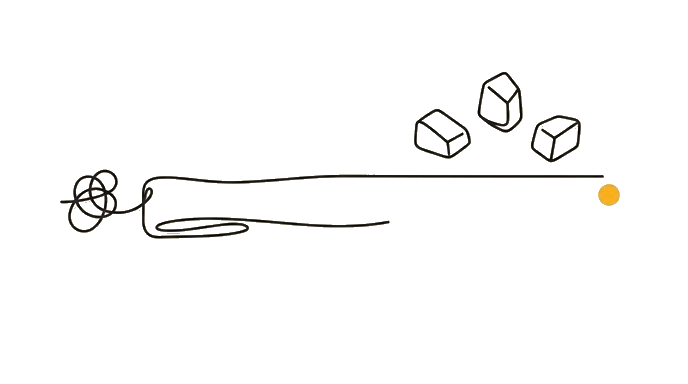
This one habit separates people who find Claude useful from people who find it disappointing. A steer can be as short as "cut this in half" or "make it warmer."
Here is the before and after: Without follow-ups, you get a stiff thank-you note and rewrite the whole thing by hand. With three short steers ("too formal," "shorter, two sentences," "add that I loved the handwritten card") the note is exactly right and you typed maybe fifteen words.
Now try it ask Claude for something, then resist fixing the reply yourself. Send one short instruction naming the single thing to change.
You are not stuck with the first answer; you are two or three sentences away from the right one.
Try it (8 min)
Watch out for
- Copying the first reply into a document and fixing it by hand instead of asking Claude to fix it
- Stacking five changes into one message, so you cannot tell which instruction did what
- Starting a brand new request when a one-line follow-up would have done the job
- Saying 'make it better' instead of naming the specific thing that is wrong
Paste this into Claude
Write a message I can send to my team announcing that next Friday's meeting is moving to Monday at 10am.

(After Claude replies, do NOT edit it yourself. Send these follow-ups one at a time, reading each new version before the next:)
1. "Make it about half as long."
2. "Add one sentence saying the agenda stays exactly the same."
3. "End on a friendly note, not a formal sign-off."
What good looks like
- You sent at least two follow-up messages instead of editing the text yourself
- Each follow-up changed only the one thing you named and kept the rest intact
- The final version is shorter and friendlier than the first draft
- The final message includes the agenda-stays-the-same line you requested
When this breaks
- Breaks when you bundle many edits into a single message, because Claude has to juggle all of them at once and often drops one.
- Breaks when you abandon the conversation and start over for a small fix, because you throw away all the context Claude already had.
AI can help with this
After any reply you almost like, send a one-line steer instead of rewriting it: 'Shorter.' / 'Warmer tone.' / 'You missed [thing], add it.' / 'Keep everything but change [the one part].'
You can now
You can complete the lesson outcome in a real Claude chat, Project, Artifact, Connector, Desktop, or Code surface.
- You sent at least two follow-up messages instead of editing the text yourself.
- You can verify that each follow-up changed only the one thing you named and kept the rest intact.
- You can verify that the final version is shorter and friendlier than the first draft.
- You can verify that the final message includes the agenda-stays-the-same line you requested.
Key takeaways
The first reply is a draft. Naming one change at a time and letting Claude revise gets you to finished faster than rewriting it yourself ever would.
- Treat the first reply as a draft and steer it with short follow-up messages.
- Change one thing per message so you can see exactly what each instruction does.
- Keep refining inside the same conversation instead of starting over for small fixes.
- Name the specific problem ('too formal', 'too long') rather than asking Claude to 'make it better'.