How to ask Claude about code without understanding it
Three questions that work no matter how technical the code is
After this, you'll be able to ask Claude the three questions about any code that a non-developer actually needs answered, and get plain-English answers you can act on or repeat.
Before you start
Complete GitHub for non-developers first; this lesson builds on that by turning the code you can now reach into three questions you can ask without reading it.
The idea
The best questions to ask of any code are not "how does this work" but three about consequences. They are what does this change, what could go wrong, and what does it depend on, and Claude answers all three in plain English from any code you paste. You need not read a single line to ask them.
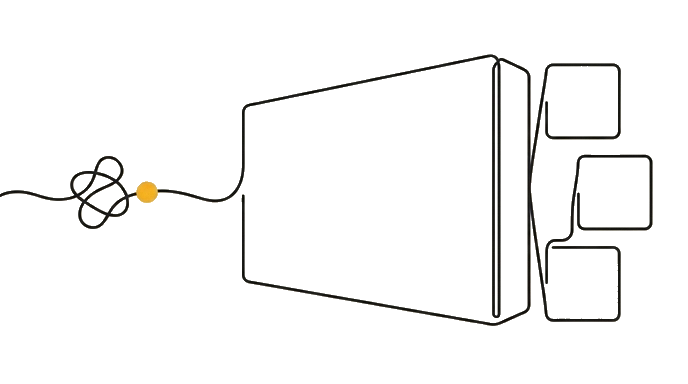
Most people freeze in front of code because they think the only question is "how does this work," and that one needs training you do not have. What it changes tells you the impact. What could go wrong tells you the risk, and what it depends on tells you what else is involved.
Here is the before and after: Before, a developer drops a block of code in a chat and asks "does this look okay?" You panic, cannot read it, and say "looks fine" without meaning it. After, you paste it into Claude, ask the three questions, and learn it changes how customer emails are sent, could fail if an address is missing, and depends on billing being online.
Now try it: find any snippet of code, paste it into Claude, and ask all three at once: "What does this change, what could go wrong, and what does this depend on? Answer in plain English."
Ask about consequences, not mechanics, and that is the whole move.
Try it (9 min)
Watch out for
- Asking 'how does this work' and then feeling stupid when the answer is technical. Ask what it changes, risks, and depends on instead.
- Saying 'looks fine' to a developer when you have not actually checked. Run the three questions through Claude first.
- Accepting a code answer full of jargon. Tell Claude to define every term in the sentence it uses it.
- Pasting code with no context about where it came from. A line about what the project does sharpens Claude's answer.
- Forgetting to ask what it depends on. Hidden connections to other systems are where surprises hide.
Paste this into Claude
Someone shared this code with me and asked for my input. I am not a developer and I cannot read code, but I can ask the right questions. Here is the code:
[paste the code snippet here]

Please answer these three questions in plain English, one at a time:
1. What does this change or do? (the impact)
2. What could go wrong with it? (the risk)
3. What does this depend on to work? (the connections to other systems)

For each answer, avoid jargon. If you must use a technical term, define it in the same sentence. End with one sharp question I could ask the person who wrote it.
What good looks like
- Claude answers all three questions (what it changes, what could go wrong, what it depends on) in plain English
- Every technical term is defined in the sentence it appears
- The answers describe consequences, not a line-by-line walkthrough of the code
- Claude ends with one informed question you could ask the author
When this breaks
- Breaks when you ask for a line-by-line explanation because that demands developer fluency, while the three consequence questions need none and still give you what to act on.
- Breaks when you paste code with zero context because Claude cannot always tell what the surrounding system is, so naming the project or feature makes the risk answer far more accurate.
AI can help with this
Paste any code into Claude with this: 'In plain English, what does this change, what could go wrong, and what does it depend on? Define any technical term as you use it.'
You can now
You can complete the lesson outcome in a real Claude chat, Project, Artifact, Connector, Desktop, or Code surface.
- You can verify that claude answers all three questions (what it changes, what could go wrong, what it depends on) in plain English.
- You can verify that every technical term is defined in the sentence it appears.
- You can verify that the answers describe consequences, not a line-by-line walkthrough of the code.
- You can verify that claude ends with one informed question you could ask the author.
Key takeaways
You do not need to read code to review it. Ask Claude what it changes, what could go wrong, and what it depends on, and you get consequences in plain English from any code input.
- Replace 'how does this work' with the three consequence questions: change, risk, dependency.
- Run code past Claude before telling a developer it looks fine.
- Demand plain English and in-line definitions for any term Claude uses.
- Always ask what the code depends on, since hidden connections cause the surprises.