Helping someone else get started with Claude
Teaching a beginner is the real test of your own platform fluency
After this, you'll be able to explain what Claude is, what it needs to produce good output, and which three features a beginner should set up first, which is the test that you understand the platform yourself.
Before you start
Complete What's next: the track map from here first; this lesson builds on that whole-platform overview, because you can only teach the few things that matter to a beginner once you can see the full map you are compressing.
The idea
Explaining Claude to a colleague who has never used it is the final test of your platform fluency. If you can describe what Claude is, what it needs to produce good output, and which three features to set up first, you understand it well enough to teach it.
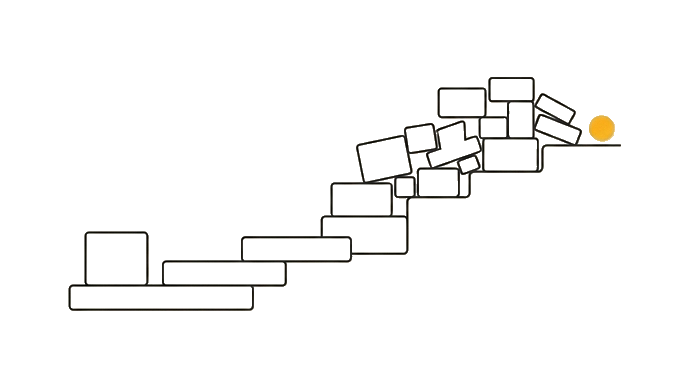
Teaching forces you to compress everything you learned into the few things that matter to a beginner. You cannot hide behind features you half-understand, because a beginner will ask the plain question you skipped.
Here is the before and after: Without a plan, you list twenty features and your colleague leaves overwhelmed. With a plan, you tell them three things: Claude is a reasoning partner you direct (not a search box); it produces what you ask for, so being specific changes everything; and you start with a Project, then Memory, then one connector.
Now try it in three sentences, write how you would explain Claude to someone who has never used it (what it is, what it needs, the first three features), then have Claude pressure-test it for a true beginner.
If you can teach it in three clear sentences, you own it.
Try it (11 min)
Watch out for
- Listing every feature you know instead of the three that get a beginner started; more is not clearer
- Explaining Claude as a search engine because it is familiar; that frame sets the beginner up to use it badly from day one
- Using a term you understand but never define (Project, connector, context) and losing the beginner on the first jargon word
- Picking advanced starter features to look impressive; a beginner needs a Project and Memory before anything paid like Cowork
- Teaching the menu (where every button is) instead of the model (what Claude is and what it needs from them)
Paste this into Claude
I want to be able to teach Claude to a colleague who has never used it. I'm going to write my explanation, and I want you to pressure-test it the way a real beginner would.

Here is how I would explain Claude to a complete beginner:

1. WHAT CLAUDE IS (one or two sentences): [your explanation]

2. WHAT IT NEEDS FROM THEM to produce good output (one or two sentences): [your explanation]

3. THE FIRST THREE FEATURES I'd have them set up, in order, and why: [your explanation]

Now, acting as a smart but completely non-technical beginner who has never used any AI tool:
1. Point out anything in my explanation that uses a word or idea a true beginner would not understand
2. Ask me the two questions a real beginner would most likely ask after hearing this
3. Tell me whether my three starter features are the right three for a beginner, or whether you'd swap one, and why
4. Give me a tighter version of my whole explanation that a beginner would actually remember
What good looks like
- Your explanation covers all three parts: what Claude is, what it needs, and the first three features in order
- Claude flagged any term or idea a true beginner would not follow
- Claude surfaced the two questions a beginner would most likely ask
- Claude confirmed or improved your choice of three starter features with a reason
- You can deliver the explanation out loud in under a minute without notes
When this breaks
- Breaks when you teach features instead of the mental model because the beginner can repeat the steps but cannot reason about a new task, so they stall the moment their situation differs from your example.
- Degrades when you explain Claude as a smarter search box because that frame teaches one-shot queries, and the beginner never learns to direct and refine, which is where the value actually is.
AI can help with this
Paste this: 'I want to teach Claude to a beginner. Here is my explanation: 1) what Claude is; 2) what it needs to give good output; 3) the first three features I'd set up, in order. Acting as a non-technical beginner, flag any jargon, ask the two questions a beginner would ask, say if my three features are right, and give me a tighter version they would remember.'
You can now
You can complete the lesson outcome in a real Claude chat, Project, Artifact, Connector, Desktop, or Code surface.
- You can verify that your explanation covers all three parts: what Claude is, what it needs, and the first three features in order.
- You can verify that claude flagged any term or idea a true beginner would not follow.
- You can verify that claude surfaced the two questions a beginner would most likely ask.
- You can verify that claude confirmed or improved your choice of three starter features with a reason.
Key takeaways
If you can explain what Claude is, what it needs to produce good output, and the first three features to set up, in a few clear sentences, you have proven you understand the platform yourself.
- Teach the model, not the menu: what Claude is and what it needs beats a list of buttons.
- Frame Claude as a reasoning partner you direct, never as a smarter search box.
- Start a beginner with a Project, then Memory, then one connector, in that order.
- Compress your explanation to a few sentences a true beginner can repeat back; that is the real test of your fluency.
Go deeper
Track complete
You finished every lesson in Claude Fundamentals. Pick one thing you learned here and run it on your own work this week. Every lesson stays open, so come back anytime you need it.