Define the source boundary
What the system can and cannot know
After this, you'll be able to name the source set a knowledge assistant can use, what is excluded, and what answer types require human review.
Before you start
Complete Tool Crossover first if you are choosing between Projects, files, connectors, or a custom knowledge tool.
The idea
A knowledge workflow starts by naming what counts as source truth.
| Included | Excluded | Unknown | Review | |
|---|---|---|---|---|
| Meaning | Valid source | Do not use | Not covered | Human owner |
| Example | Handbook | Draft PDF | Missing policy | HR approval |
| Risk | Too narrow | Stale answer | Guessing | Slow response |
No source, no confident answer.
Boundary rule: the assistant can answer only from sources you load, connect, or cite. Anything outside that set is an unknown, not a guess.
The source boundary should include included folders, excluded folders, stale documents, private material, and answers that need human review.
Worked example: a team asks for policy answers. The source boundary includes the current handbook and HR updates, excludes old draft PDFs, and sends legal questions to HR before sharing.
Define the source boundary before asking questions.
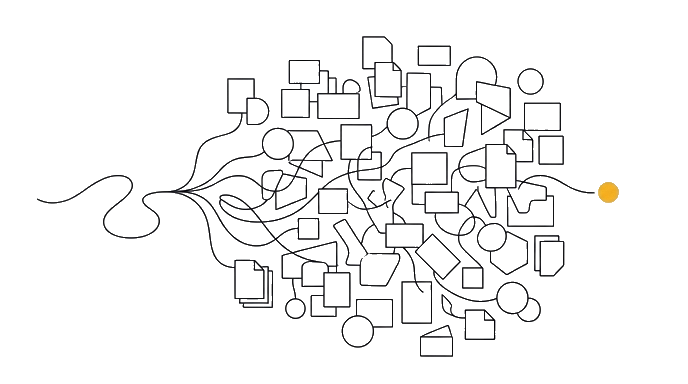
Source boundaries prevent confident wrong answers. A knowledge assistant can sound like it knows the whole company when it only saw five files. The boundary makes that visible. It tells the tool what can be answered, what cannot be answered, and which answer types need a human owner.
Write the boundary in reader terms. "Use the current handbook and June HR update" is better than "use HR docs." "Do not answer compensation exceptions" is better than "be careful." The boundary should make refusal acceptable when the source set does not support an answer.
Try it (10 min)
Watch out for
- Assuming the tool knows every company document.
- Including stale drafts.
- Letting private notes enter a team source set.
- Skipping human review categories.
Paste this into Claude
Define the source boundary.

Knowledge task: [what people will ask]
Included sources: [folders, docs, files, links]
Excluded sources: [old, private, draft, unknown]
Human review needed for: [legal, HR, finance, client, other]

Return:
1. Included source set.
2. Exclusions.
3. Unknowns.
4. Human review rules.
What a good response looks like
Included: current handbook, June HR update, approved FAQ. Excluded: old onboarding drafts and private manager notes. Unknowns: contractor policy after June. Review: HR approves legal or compensation answers.
What good looks like
- The boundary names included sources
- It names exclusions
- It keeps unknowns visible
- It names human review rules
When this breaks
- Breaks when excluded sources are silently treated as valid.
- Breaks when answer scope is wider than the loaded source set.
AI can help with this
Use your knowledge assistant to help you you can name the source set a knowledge assistant can use, what is excluded, and what answer types require human review. Start with the exercise prompt and your real input. Ask for one draft, then check it against this proof: The boundary names included sources. Accept only the version you can verify yourself.
You can now
You can name sources
- You can exclude stale material
- You can preserve unknowns
- You can require review
Key takeaways
Knowledge answers are only as trustworthy as the source boundary behind them.
- Included sources must be named.
- Excluded sources matter.
- Unknowns are allowed.
- Human review keeps risk bounded.
Go deeper