Recurring work without you: Routines and the no-code alternative
Where scheduled work lives, and which one is built for you
After this, you'll be able to explain that a Routine is a Claude Code feature tied to a connected GitHub repository, name its parts (a prompt, one or more repositories, and connectors), say that it runs cloud-only on Anthropic's infrastructure and is in research preview, and say that the no-code path for recurring work is Claude Cowork, covered in the next module.
Before you start
Complete Read vs read and write first; this lesson builds directly on that permission distinction, because the connectors a Routine includes can read or write during a run, and you decided when write access is worth granting.
The idea
There are two ways Claude does recurring work on its own, and the deciding factor is whether the work is tied to a code project. A Routine is a Claude Code feature, currently in research preview: it pairs a prompt with one or more connected GitHub repositories and the connectors it may use, and runs on a schedule. The no-code path is Claude Cowork, which the next module covers.
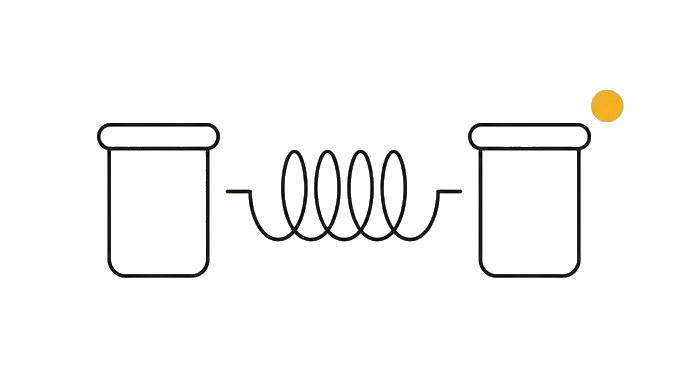
A repository, or repo, is the folder where a software project's files live, kept on GitHub. A Routine clones a fresh copy of each repository at the start of every run. If your recurring task does not involve a code repository, a Routine is not your tool.
Routines run cloud-only, on Anthropic-managed infrastructure, so they fire even with your laptop closed. The "Local" choice you may see in the Desktop app is a different thing, a Desktop scheduled task on your own machine, not a Routine.
Here is the before and after: Before, you hear "automate it" and assume there is one feature for everyone. After, you ask one question: does this work touch a code repository? If yes, it is a Routine in Claude Code; if no, your hands-off path is Cowork, the paid no-code worker in the next module.
Now try it name your most repetitive recurring task out loud, then say whether it touches a code repository, so you know which surface it belongs on before you go looking.
A Routine is a Claude Code feature for work tied to a code repository; for no-code recurring work, Cowork is your path.
Try it (11 min)
Watch out for
- Treating a Routine as the no-code automation for everyone. It is a Claude Code feature tied to a connected GitHub repository.
- Forcing a no-code chore into a Routine. With no code repository to clone, a Routine has nothing to work in; that is Cowork's job.
- Assuming recurring work is free. Cowork is paid, and Routines live in Claude Code, which is also paid.
- Writing a thin prompt. Any scheduled run is unattended, so the prompt must be self-contained, not a chat opener.
- Thinking a Routine can run on your laptop. Routines are cloud-only; the Desktop app's 'Local' choice is a separate scheduled task, not a Routine.
Paste this into Claude
Help me figure out where a recurring task of mine belongs. There are two paths for hands-off recurring work in Claude. A Routine is a Claude Code feature, in research preview: it pairs a prompt with one or more connected GitHub repositories (a "repository" is the folder where a software project's files live, kept on GitHub) and the connectors it may use, and runs on a schedule, cloud-only on Anthropic's infrastructure. The no-code path, for recurring work that does not touch a code repository, is Claude Cowork, a paid feature covered separately.

A recurring task I do on a fixed rhythm: [e.g. "every Friday I update our project docs after the week's changes" or "every morning I summarize my open to-dos"].

Help me reason it through:
1. SURFACE: does this task involve a code repository (a software project's files kept on GitHub)? Based on that, tell me plainly whether it belongs in Claude Code as a Routine, or is a no-code recurring task that belongs in Cowork instead
2. INPUTS: if it is a Routine, list what it would need (a self-contained prompt, the GitHub repository it runs against, and the connectors the run reads from or writes to)
3. SCHEDULE: pin the exact recurrence (for example "every weekday at 7am" or "every Friday night")
4. WHY: explain in one or two sentences why a self-contained prompt matters when no human is watching the run

Explain any term in plain language as you go.
What good looks like
- Claude judged whether the task involves a code repository, the thing that decides Routine versus Cowork
- If it is no-code, Claude pointed you to Cowork instead of forcing it into a Routine
- If it is a Routine, the listed inputs include a self-contained prompt, a GitHub repository, and connectors
- The schedule is an exact recurrence, not 'regularly' or 'often'
- Claude explained why an unattended run needs a self-contained prompt
When this breaks
- Breaks when a no-code recurring task is set up as a Routine, because a Routine clones a GitHub repository to work in, so with no code repository it has nothing to do.
- Breaks when the prompt assumes a human will clarify mid-run, because any scheduled run is unattended, so anything left implicit gets guessed instead of asked.
AI can help with this
Paste: 'I have a recurring task: [describe it]. A Routine is a Claude Code feature (in research preview) that pairs a prompt with one or more connected GitHub repositories and connectors, run on a schedule, cloud-only on Anthropic's infrastructure. Tell me plainly whether this task belongs in Claude Code as a Routine or is a no-code task for Cowork instead, then, if it is a Routine, list the prompt, the GitHub repository, and the connectors, and pin an exact schedule.'
You can now
You can complete the lesson outcome in a real Claude chat, Project, Artifact, Connector, Desktop, or Code surface.
- You can verify that claude judged whether the task involves a code repository, the thing that decides Routine versus Cowork.
- You can verify that if it is no-code, Claude pointed you to Cowork instead of forcing it into a Routine.
- You can verify that if it is a Routine, the listed inputs include a self-contained prompt, a GitHub repository, and connectors.
- You can verify that the schedule is an exact recurrence, not 'regularly' or 'often'.
Key takeaways
A Routine is a Claude Code feature, currently in research preview: a prompt, one or more connected GitHub repositories, and connectors, run on a schedule, cloud-only on Anthropic's infrastructure. For recurring work that does not touch a code repository, the path is Claude Cowork, the paid no-code worker covered next.
- Place recurring work by one question: does it touch a code repository? If yes, a Routine; if no, Cowork.
- Define a Routine as a Claude Code feature pairing a prompt, connected GitHub repositories, and connectors on a schedule.
- Know a Routine runs cloud-only on Anthropic's infrastructure; the Desktop 'Local' option is a separate scheduled task.
- Send no-code recurring work to Claude Cowork, the paid worker covered in the next module, not to a Routine.
- Write a self-contained prompt for any scheduled run, since no one is watching to clarify mid-run.
Go deeper