Pick the tool from the work
ChatGPT, Claude chat, Codex, or Claude Code
After this, you'll be able to decide whether a task belongs in ChatGPT, Claude chat, Codex, or Claude Code before you start.
Before you start
Complete What AI is not search first.
The idea
Tool choice starts with the work surface, not the brand.
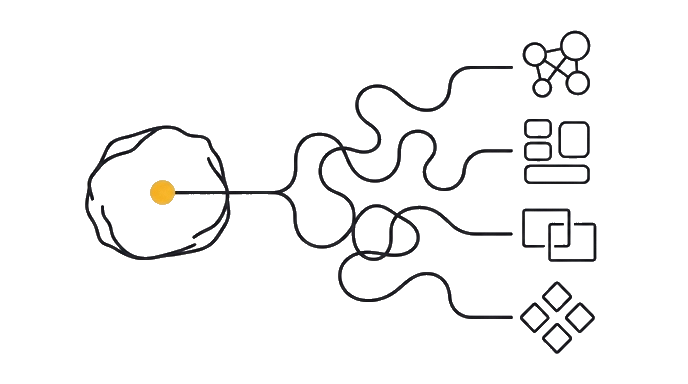
| Chat tools | Code agents | |
|---|---|---|
| Best first use | Thinking, files, drafts, analysis | File edits, commands, tests, PRs |
| Finished output | Memo, plan, brief, table | Changed files, build, diff |
| Proof | Sources, notes, approval | Tests, build, route check |
| Handoff moment | When output becomes code | When code needs human review |
Start where the finished work will live.
Tool split: ChatGPT and Claude chat own conversation, files, analysis, drafting, and thinking with supplied context. Codex and Claude Code own repo work.
Repo work means changing files in a codebase. Commands are instructions you type into a terminal, the text window developers use to run project tasks. Tests and diffs prove what changed before you accept it.
Use ChatGPT when the work starts from OpenAI features you already use, like Projects or custom GPTs. Use Claude chat when the work starts from Claude Projects, Artifacts, long notes, or creative direction.
Use Codex when repo work needs review, changes kept separate while you work, browser checks, or a long goal. Use Claude Code when your team already uses Claude Code for repo work and has its setup in place.
Decision rule: name where the finished work will live. If it ends as a memo, plan, table, image brief, or review note, start in chat. If it ends as changed files with proof, start in a code agent.
Worked example: a team asks for "turn these notes into a pricing page change." The first output is a page brief, so the work starts in Claude chat. Once the brief names sections, files, and proof, Codex owns the repo change.
If work starts in chat and ends in code, write a handoff instead of pasting a messy transcript.
Try it (10 min)
Watch out for
- It is easy to move into a code agent too early. If you are still exploring the idea, stay in chat for one more turn.
- It is easy to stay in chat too long. If the finished output is changed files, write the handoff and move to a code agent.
- A familiar tool may still be the wrong owner. Check where the finished work will live.
- A transcript is not a handoff. Move a summary, source list, and proof list instead.
Paste this into Claude
Classify this task before doing it.

Task: [describe one real mixed AI task]

Step 1: Name where the finished work ends: chat answer, memo, table, design brief, changed files, website, PR, or report.
Step 2: Choose the starting tool: ChatGPT, Claude chat, Codex, or Claude Code.

Return:
1. The chosen starting tool.
2. Why that tool owns the first step.
3. The handoff point if another tool must take over.
4. The proof required before the task is done.
What a good response looks like
Start in Claude chat because the first output is a creative brief from notes and screenshots. Hand off to Codex only after the brief names the page sections, assets, copy, and acceptance checks. Done means the repo diff builds and the page renders locally.
What good looks like
- The answer chooses one starting tool
- It names the finished output
- It names any handoff point
- It names proof before acceptance
When this breaks
- Breaks when the first tool cannot inspect the source context.
- Breaks when the handoff omits proof, so the second tool guesses what done means.
AI can help with this
Use the tool you chose to help you you can decide whether a task belongs in ChatGPT, Claude chat, Codex, or Claude Code before you start. Start with the exercise prompt and your real input. Ask for one draft, then check it against this proof: The answer chooses one starting tool. Accept only the version you can verify yourself.
You can now
You can separate chat work from repo work
- You can name the finished output before choosing a tool
- You can decide when a handoff is required
- You can state proof for the final owner
Key takeaways
Pick the tool that owns the finished surface. Chat owns thinking and artifacts. Code agents own changed files and proof.
- ChatGPT and Claude chat are workspaces for conversation, files, analysis, and drafts.
- Codex and Claude Code are repo agents for edits, commands, tests, diffs, and handoff.
- Mixed work needs a written handoff at the moment ownership changes.
- Done depends on proof, not on which model sounded confident.