Set up your Cowork folder so Claude knows you on day one
After this, you'll have a Claude Cowork folder with three named subfolders, three populated ABOUT ME files written by Claude through interview prompts, and Global Instructions configured so Claude reads your identity before every task.
Before you start
Complete Set Up Your Persistent Workspace first; this lesson extends the same one-time-setup pattern to the Cowork desktop app, where identity lives in files on your disk instead of a settings field.
The idea
Cowork reads files from your disk every session, so you brief Claude once instead of retyping who you are every chat. Browser Claude resets every chat. You retype your role, your audience, and your preferences at the top of every conversation, and it still drifts back to its default voice (the generic tone Claude falls back to when it does not know you) halfway through.
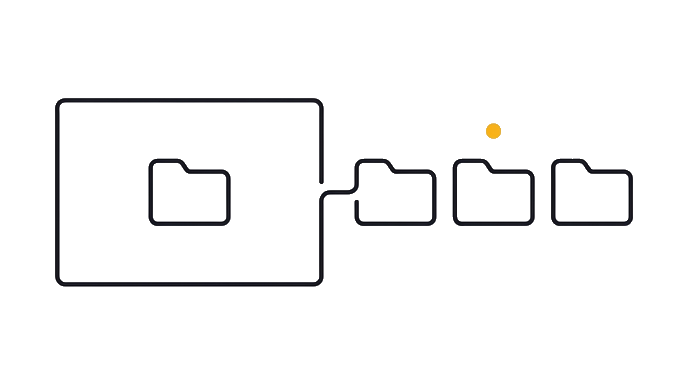
Cowork is the desktop app that fixes this. It reads files from your disk every time you open it. Three folders, three files, one setting: done once, applied every session.
Here is the before and after: Without Cowork, you brief Claude in 200 words at the top of every chat about your role, your clients, the voice you want, what to avoid. With this setup, those 200 words live in a file Claude reads automatically before it sees your first message. You stop briefing, your first prompt is the actual task, and the first reply lands closer to what you wanted because Claude already knows who you are.
The shape of the setup: one folder on your disk called Claude Cowork, three subfolders inside (ABOUT ME, OUTPUTS, TEMPLATES), and three required files in ABOUT ME (about-me.md, anti-ai-writing-style.md, my-company.md). The `.md` ending means markdown (a plain text file with light formatting, the kind any notes app can open). One Global Instructions setting (a single box in Cowork's settings) tells Cowork to read those three files before every task.
The about-me and my-company files get generated by Claude itself. You answer 15 to 20 questions in an interview run through AskUserQuestion (Claude's built-in picker that pops up multiple-choice questions, so you tap answers instead of typing essays). Claude compiles your answers into one tight markdown file.
The token reason matters, and first it helps to know what a token is. A token is a small chunk of text the AI counts as it reads, roughly three-quarters of a word. Every token Claude reads costs a little money and a little of its limited attention.
A long file also crowds the context window (the limited amount of text Claude can hold in mind at once), and the more it holds, the less reliably it uses any one part. So a bloated identity file gets read less carefully and your identity goes vague. Keep each file tight, ideally under 2,000 tokens (about 1,500 words), and it stays sharp.
Now try it: Cowork lives inside the Claude desktop app, so you open it by signing in with your Claude account. If a feature is greyed out or missing, that is a plan or gradual-rollout limit, not a mistake on your end, and the support docs linked below say which plans include it.
Install the app, create the three folders by the exact names above, then run the about-me interview prompt below. Claude asks the questions; you answer by tapping its built-in picker. Twenty minutes of answers compiles into one file you reuse forever.
Set the folder once; every Cowork session opens with full context.
- Claude CoworkYour project folder on disk
- ABOUT MEreads thisWho you are and how you work. Loaded before every task.
- about-me.mdYour role, voice, and working style
- anti-ai-writing-style.mdWords and patterns Claude must never use
- my-company.mdGoals, focus, and what you are working on now
- OUTPUTSskippedSaved deliverables. Claude does not read these.
- TEMPLATESskippedSaved prompt structures. Claude does not read these.
Try it (20 min)
Watch out for
- Skipping the AskUserQuestion picker and pasting long answers directly. The picker forces Claude to ask focused questions and you to give focused answers. Long monologues produce vague files.
- Stuffing project-specific details into about-me.md (current client names, this week's deadlines, the brief you are writing today). Those change weekly. about-me.md is for stable facts about who you are and how you work; my-company.md is for current goals.
- Writing the ABOUT ME files yourself instead of running the interview prompts. The interview pulls out patterns you would not surface alone. The point of the prompt is the interview, not the typing.
- Letting about-me.md balloon. The bigger it gets, the more it crowds Claude's context window and the less reliably it is used, so the model drifts back toward default voice. Cut it back every month or two.
Paste this into Claude
You are building my about-me.md file for my Cowork folder. This file will be read by Claude at the start of every session to help you do my job with me. It needs to be concise and high-signal.

Your job: interview me using AskUserQuestion (15 to 20 questions), then compile the answers into a condensed about-me.md under 2,000 tokens.

## How to interview me

Use AskUserQuestion for every question. One question at a time. Let me use "Other" to dictate long answers when I need to.

If I give a vague answer, push back. Ask for a specific example or rephrase. Do not accept "I like to keep things clear" without knowing what clear looks like in my work.

Follow interesting threads. If something unexpected comes up, go deeper before moving on.

## What to cover (adapt based on what matters for my role)

WHO I AM (3 questions)
- What do I do? My role, my company, my industry?
- Who do I work with or work for? (clients, team, stakeholders, audience)
- What does a good week of work look like for me?

HOW I WORK (4 questions)
- What tools do I use every day and how?
- Walk me through how I start a typical task from zero to done.
- What does my review or quality-check (QA) process look like?
- When I hand something off (client, boss, reader), what does "done" look like?

WHAT GOOD LOOKS LIKE (4 questions)
- Describe the best output I produced recently. What made it good?
- What separates great work from average work in my field?
- When I look at someone else's work and think "this is good," what am I reacting to?
- If you had to judge my work, what should you be looking for?

WHAT I HATE (3 questions)
- An example of bad work in my field. What specifically makes it bad?
- Patterns, shortcuts, or habits in my industry that make me cringe?
- When Claude writes something for me and it is wrong, what is usually off? (tone, structure, detail level, assumptions)

MY RULES (2 questions)
- What do I never do in my work? Hard lines I will not cross.
- The 2 or 3 non-negotiables every piece of my work must have?

MY OPINIONS (2 questions)
- What do I believe about my field that most peers would push back on?
- Tools, methods, or trends I think are overrated? What is underrated?

## Output format

After the interview, compile everything into a single markdown file. Do NOT save raw Q&A transcripts. Extract the patterns from my answers and write them as condensed prose and bullet points.

Structure:

# ABOUT ME: [My Name]

## Who I am
[2-3 sentences. My role, my work, my audience. Current facts and numbers if relevant.]

## How I work
[Daily tools, process, how I start tasks, how I review, what "done" looks like. Short paragraphs.]

## What good looks like
[What I value in my own work and others'. The standards I hold. Condensed from examples I gave.]

## What I hate
[Patterns, shortcuts, and mistakes that bother me. What "wrong" looks like. Specific, not vague.]

## My rules
[Numbered list. Hard lines and non-negotiables.]

## Instructions for Claude
[10 numbered rules for how to work with me. Derived from everything above. Focus on what Claude must DO and NOT DO, not abstract principles.]

Target: under 2,000 tokens total. Every sentence should carry signal. If a sentence could be cut without losing information, cut it.

Save the file as about-me.md in my ABOUT ME/ folder.
What a good response looks like
Here is the compiled about-me.md from your interview:

# ABOUT ME: Jane Park

## Who I am
Freelance brand strategist working with early-stage consumer brands in food, beverage, and wellness. Six clients per year on retainer; one or two project engagements per quarter. I write the strategy doc; the founder builds the brand around it.

## How I work
Notion for client notes, Google Docs for strategy decks, Figma for moodboards, Claude for synthesis and copy drafting. Every project starts with a 90-minute founder interview and a competitive scan. I write the first draft myself, then use Claude to pressure-test the positioning and catch the logic gaps.

## What good looks like
A strategy doc the founder can read in 20 minutes and refer to for two years. Specific enough that a designer briefing themselves on it produces work that fits. Short enough that nobody skims past the key trade-off.

## What I hate
Strategy decks padded with frameworks the founder will never use. Anything called a "north star" that is actually a vague aspiration. Positioning statements that could describe three competitors.

## My rules
1. Never recommend a positioning the founder cannot say out loud confidently.
2. Always name the trade-off explicitly. If we are choosing X, we are choosing not-Y.
3. Strategy docs ship under 12 pages, period.

## Instructions for Claude
1. Default to plain prose, not slide-deck bullet lists, unless I ask.
2. Pressure-test my positioning by asking "what would the opposite of this strategy be?"
3. Do not generate brand names, taglines, or values lists without me asking.
4. When I share a competitive scan, focus on what each brand is choosing NOT to be.
5. Keep responses under 400 words unless the task explicitly needs more.
6. If I paste a strategy draft, default to critique, not rewrite, unless I ask for rewrite.
7. Never use the phrase "elevate" or "redefine" in any brand copy.
8. Numbers and category data should always have a source or be flagged as estimate.
9. If a question feels under-briefed, ask before answering.
10. Match the founder's reading level, not mine; assume smart but not a brand person.

Total: ~480 words, well under the 2,000 token target.
What good looks like
- You have a folder on your disk named 'Claude Cowork' with three subfolders by exact name: ABOUT ME, OUTPUTS, TEMPLATES
- Your ABOUT ME folder contains about-me.md (under 2,000 tokens), anti-ai-writing-style.md (your voice bans), and my-company.md (built in the second exercise)
- Global Instructions is set in Cowork Settings to read the three ABOUT ME files before every task and to skip OUTPUTS and TEMPLATES unless you point at them
- In a fresh Cowork session, Claude's first reply references something specific from your ABOUT ME (your role, a hard rule, a preferred format) without you having mentioned it in this session
- about-me.md is tight, ideally under 2,000 tokens (about 1,500 words). The smaller and sharper, the better the context.
Go deeper (12 min)
Paste this into Claude
You are building my my-company.md file for my Cowork folder. This file tells Claude what I am working toward right now so it can make better decisions on every task.

Important: my about-me.md already covers who I am, how I work, and my standards. This file is ONLY about goals, strategy, and decisions. No overlap.

Your job: interview me using AskUserQuestion (6 to 8 questions), then compile the answers into a condensed my-company.md under 1,000 tokens.

## How to interview me

Use AskUserQuestion for every question. One question at a time. Let me use "Other" to dictate long answers when I need to.

## What to cover (6 to 8 questions)

GOALS (3 to 4 questions)
- My top 2 to 3 goals for this year. Specific numbers or milestones.
- Platforms, channels, or markets that matter most right now?
- The one metric that would tell me this year was a success?
- Revenue targets, audience targets, or product milestones? What are they?

DECISIONS (3 to 4 questions)
- What am I actively saying no to right now? (opportunities, trends, platforms, tactics)
- What did I recently stop doing? Why?
- Where am I spending most of my time and energy this quarter?
- Is there anything I am betting on that most people in my field are not?

## Output format

After the interview, compile everything into a single markdown file. Short sections, mostly bullet points. No filler. No identity info (that is in about-me.md).

Structure:

# MY COMPANY

## Goals
[Bullet points. Specific targets with numbers where possible. Organized by category if needed.]

## Focus right now
[What I am spending time and energy on this quarter. 2 to 3 bullet points max.]

## Saying no to
[Bullet points. Things I am actively declining or ignoring.]

Target: under 1,000 tokens. Update this file when priorities change, not on a schedule.

Save the file as my-company.md in my ABOUT ME/ folder.

---

THEN: set Global Instructions in Cowork Settings to read the ABOUT ME folder before every task. Paste this template into Settings > Cowork > Edit Global Instructions:

I usually start my Cowork session by pointing you to my Cowork folder.

Before any and every single task, you must read every file in ABOUT ME/:
- about-me.md: it is me, who I am, what I love and hate
- anti-ai-writing-style.md: voice rules I want enforced
- my-company.md: my goals, focus, and what I am saying no to

Never read the folders OUTPUTS/ or TEMPLATES/ unless I specifically point you to a file.

Save all deliverables in OUTPUTS/ under a subfolder named after the project.

If the brief is unclear, use AskUserQuestion. Do not fill gaps with filler. Do not over-explain. Deliver the work.
What good looks like
- my-company.md exists in ABOUT ME/ and stays under 1,000 tokens (the goals and decisions file is smaller than the identity file on purpose)
- my-company.md contains no overlap with about-me.md: no role, no process, no preferences, only goals and decisions
- Global Instructions in Cowork Settings is set to read all three ABOUT ME files and explicitly excludes OUTPUTS and TEMPLATES from auto-read
- You can open a fresh Cowork session, ask a task-shaped question without preamble, and Claude's first reply reflects both your identity (from about-me.md) and your current focus (from my-company.md)
When this breaks
- Breaks when Global Instructions is empty or points at the wrong folder. Cowork reads what the setting tells it to read, nothing more. Files exist; context stays empty.
- Breaks when ABOUT ME files describe what you want to be instead of how you actually work. Aspirational profiles produce aspirational drafts that do not match anything you have shipped. The interview asks for what you currently do; answer it currently.
- Breaks when OUTPUTS and TEMPLATES are pulled into Global Instructions scope. The template excludes them on purpose. If Claude reads every old deliverable every session, the model cannot tell yesterday's draft from today's brief.
AI can help with this
Open Cowork, point it at your folder, and say: 'Run my about-me interview now. Use AskUserQuestion, one question at a time. Keep the final file under 2,000 tokens.' Claude runs the interview and writes the file. You answer questions; you do not write markdown.
You can now
You can create ABOUT ME, OUTPUTS, and TEMPLATES in one Cowork folder.
- You can keep about-me.md, anti-ai-writing-style.md, and my-company.md in ABOUT ME.
- You can point Global Instructions at ABOUT ME and exclude OUTPUTS and TEMPLATES.
- You can prove a fresh Cowork session read your identity before answering.
Key takeaways
Three folders, three files, one setting. The about-me file is the highest-payoff 20 minutes you will spend on Claude this quarter. Set it once, and every Cowork session starts with full context instead of a blank brief.
- Cowork reads files from your disk every session; browser Claude forgets every chat. That single difference is the entire reason to set up the desktop surface.
- The 3-folder shape is fixed: ABOUT ME (read every session), OUTPUTS (deliverables), TEMPLATES (saved structures). Use those exact names so Global Instructions can find them.
- Three required ABOUT ME files: about-me.md (who you are, how you work), anti-ai-writing-style.md (voice rules and bans), my-company.md (goals, focus, what you are saying no to). about-me and my-company get generated by Claude through interview prompts.
- Global Instructions points Cowork at ABOUT ME and explicitly excludes OUTPUTS and TEMPLATES from auto-read. Without the setting, the files sit on disk unused.
- Keep each ABOUT ME file tight, ideally under 2,000 tokens. The bigger a file gets, the more it crowds the context window and the vaguer your identity goes. Less in the file means more in the response.
Go deeper